 We all know how toasty and muggy the summers can be in Central Maryland and Southern Pennsylvania. That’s why dependable central A/C is so vital for families in our service area. It’s a crucial safeguard for a safer and more comfortable home on the hottest and most humid days of the year.
But if your system stops blowing cold air, you don’t need to panic. Here are some common reasons why you aren’t getting cool air from your A/C, plus how to resolve them.
Sometimes the issue behind an air conditioner that won’t cool is surprisingly simple. Before assuming there’s a major repair needed, make sure your cooling system is receiving power properly.
Take a quick look at your electrical panel to see whether a breaker has tripped. You should also confirm that any switches connected to your HVAC equipment are turned on. A disconnected power source can completely stop your central air conditioning system from operating.
Incorrect thermostat settings are another frequent cause of cooling problems. Verify that your thermostat is switched to “cool” mode and not set to “fan” or “heat.” You’ll also want to lower the temperature setting several degrees below the current indoor temperature so the cooling cycle activates properly.
Restricted airflow can dramatically reduce your system’s ability to cool your home. One of the biggest culprits is a clogged air filter.
When filters become packed with dust, pet hair and debris, your central air conditioner has to work harder while delivering weaker airflow. Over time, this can increase energy costs and strain important system components.
Turn off your HVAC system and inspect the filter near the indoor air handler or furnace. If the filter appears dirty or blocks light when held up, it’s time for a replacement. Most homeowners should put in a fresh filter every one to three months, depending on household conditions and system usage.
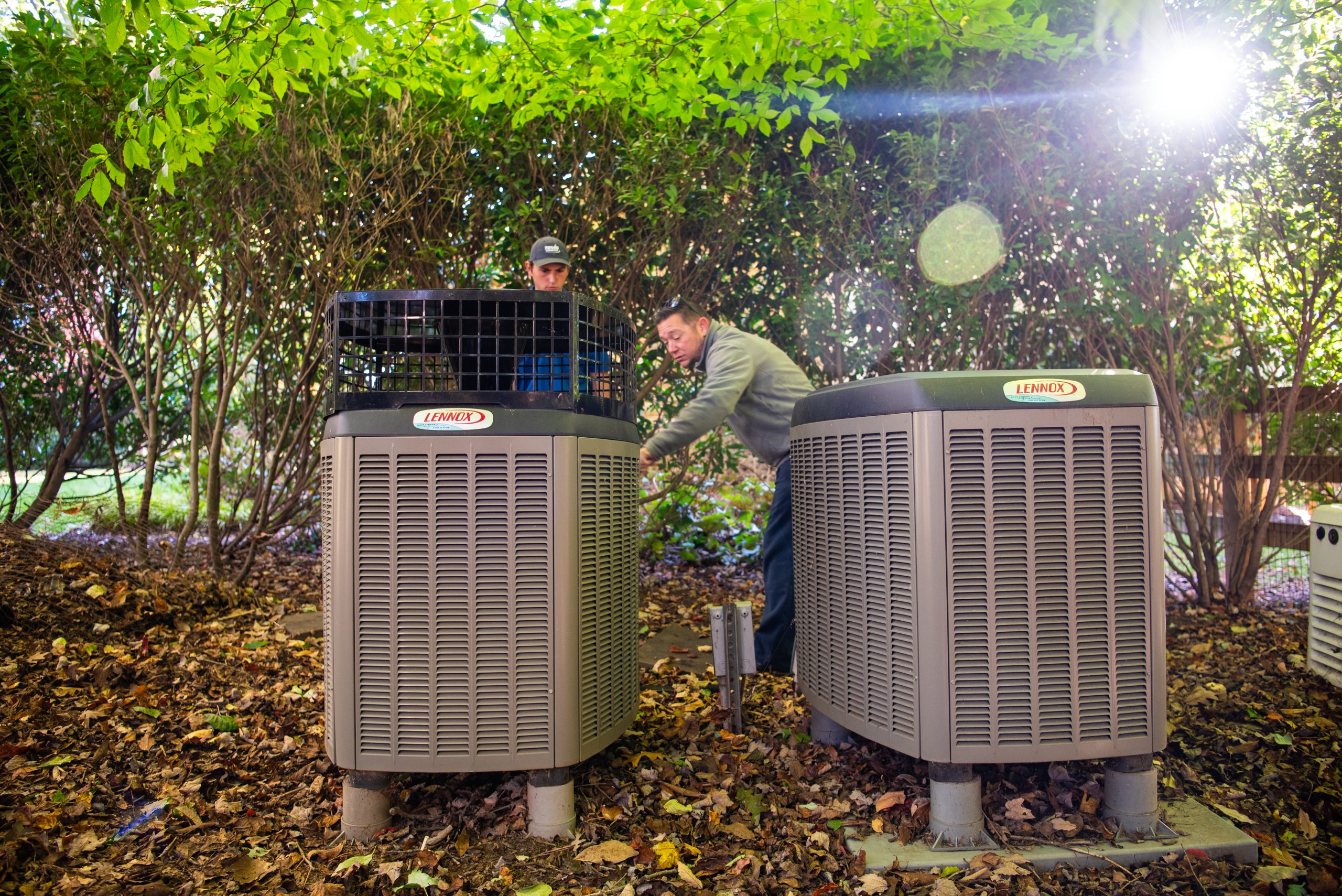
Your outdoor condenser needs proper ventilation to release heat effectively. If grass clippings, weeds, leaves or dirt build up around the unit, cooling performance can suffer.
Inspect the area surrounding the condenser and clear at least two feet of open space around it. After shutting off power to the unit, carefully rinse the exterior coils with a garden hose or gently vacuum away debris using a soft brush attachment. Avoid using excessive water pressure, since the aluminum fins can bend easily.
An evaporator coil that has frozen over can stop your system from cooling properly. This indoor component plays a major role in removing heat and humidity from your home’s air.
Common warning signs include weak airflow, warm air from vents, ice buildup on refrigerant lines and water collecting near the indoor unit as the ice melts.
If you suspect the evaporator coil is frozen, turn the system off and contact an HVAC professional like Modern Comfort. Continuing to run the equipment can lead to additional damage.
Your air conditioner relies on refrigerant to absorb indoor heat and carry it outside. If refrigerant levels drop because of a leak, your system may struggle to maintain comfortable temperatures.
Signs of low refrigerant can include longer cooling cycles, poor cooling performance and unusually high energy bills.
Because refrigerant handling requires specialized equipment and certification, this is not a DIY repair. A trained technician can locate leaks, make repairs and restart the system safely.
While homeowners can handle simple maintenance tasks, more advanced air conditioning problems require professional attention. Modern Comfort provides expert central air conditioning repairs and maintenance for homeowners throughout Frederick County, Central Maryland and Southern Pennsylvania.
From frozen coils and refrigerant leaks to electrical problems and worn-out components, our experienced technicians are ready to restore dependable comfort to your home. We also offer preventive maintenance services designed to help reduce breakdowns and improve efficiency all summer long.
Contact Modern Comfort today to schedule service or seasonal maintenance for your central air conditioning system.
